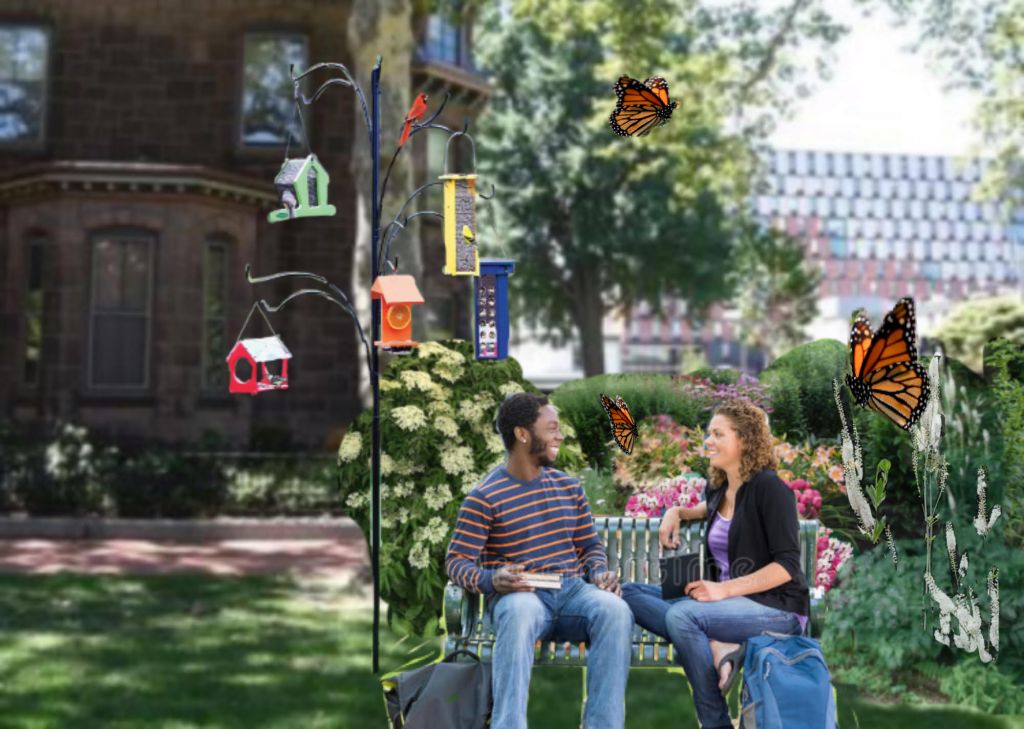
The University of Rutgers Camden is an institution of the highest excellence, and it’s students and faculty members exemplify this. While our campus is small compared to our friends in New Brunswick, we have the same fervor for bettering ourselves and the community around us. This is why I’m proposing the installation of a Medicinal Butterfly Garden on the Rutgers Camden Campus. The medicinal part of the garden is inspired by the Lenape Indians who utilized plants to cure illness and maintain health by natural means. They traditionally used black cohosh, elderberries and many others because they that acted as contraceptives, gastrointestinal aids, hypotensive medicines, sedatives, and toothache remedies due to the medicinal properties in their leaves, stems and berries. The gardens would also include plants such as milkweed because they are the primary food source for many local butterflies. But it is not just the indigenous insects that would gain, all of the students on campus would also benefit from this garden. Biology majors can observe them to study topics such as botany and ecology. Nursing students can study them to learn about the origin of many pharmaceuticals because about 25 percent of all prescription drugs contain plant derivatives. Students outside the field of science would also enjoy the garden for its beauty and can use it as a way to decompress after a stressful day of exams. In fact, research at Norwegian University of Life Sciences in Norway showed that those with clinical depression who were in a 12-week therapeutic horticulture programme, improved their overall mental health without medication by simply gardening. Anxiety.org also tells how the results of 21 different studies investigating the effect of gardening on physical and psychological well-being indicated that gardening has a positive overall effect on health, and that gardening was particularly effective in decreasing depression and anxiety. This would greatly benefit the students of Rutgers Camden because college can be very stressful and on average 41% of all college students suffer from anxiety.
In places like Camden there are few natural thriving ecosystems for our non human companion species. Butterflies are not the only organism that are negatively affected by the lack of foliage, the rest of the ecosystem is harmed because the food chain stems from species such as the butterfly. Making a green addition to the cityscape of Camden is ethically the right thing to do for everyone.
The gardens dimensions would be 15 feet by 3 feet and could also include a small bench or table. It could be located next to the Admissions Building and would be fairly inexpensive to install. The Biology students could grow the plants from the seeds to not only learn about germination but also cut the cost of the garden exponentially. In total the seeds would cost around $50 to fill the area and the bench could range from $50-$200 but one could also be donated by an Alumni. Other features could also be donated such as a birdbath and a bird feeder to further attract wildlife to the Rutgers Camden campus. The garden could even receive fertilizer from a future composting sight on campus.
-Weiner M. A. — Earth Medicine-Earth Foods. Plant remedies, drugs, and natural foods of the North American Indians
-Gonzalez, Marianne Thorsen, et al. “Therapeutic Horticulture in Clinical Depression: a Prospective Study of Active Components.” Journal of Advanced Nursing, U.S. National Library of Medicine, Sept. 2010, http://www.ncbi.nlm.nih.gov/pubmed/20626473.
-Lee, Carol S. “Gardening May Decrease Your Anxiety And Depression.” Anxiety.org, 14 Feb. 2017, http://www.anxiety.org/gardening-helps-reduce-symptoms-of-anxiety-and-depression.
 Lex's Blog